Electric automobiles change the way a home or organization uses electrical power. The moment someone calls about an EV charger in Orange County, my very first concerns are not about the brand name of charger or how quick they wish to charge. I ask about the electrical service size, the age of the panel, and what significant home appliances share the load. Getting those information right avoids problem journeys, overheated conductors, and expensive do-overs. It likewise keeps the inspector delighted and your cars and truck charging safely every night.
This guide strolls through how experienced electrical experts in Orange County examine EV charger upgrades, carry out load computations, and decide in between panel replacement, service upgrades, and clever load management. It pulls from hundreds of website sees throughout single household homes in Anaheim and Objective Viejo, apartments in Irvine, and small industrial sites in Santa Ana and Costa Mesa. The objective is clarity, not jargon, so you can make an informed decision with your certified electrician.
The genuine restraint is your service, not the charger
Most EV chauffeurs begin with the battery charger, then work backwards. That is how individuals end up with a 48 amp wall unit on a 100 amp service that already feeds a/c, an electric variety, a dryer, and a health spa. The National Electrical Code treats EV charging as a constant load. In useful terms, a 40 amp circuit supports a 32 amp battery charger, a 50 amp circuit supports a 40 amp charger, and a 60 amp circuit supports a 48 amp charger. You size the conductor and breaker to 125 percent of the constant load.
In Orange County, numerous system homes from the 1960s through the 1980s still have 100 amp services and panels that are physically constrained. A lot of homes have actually been remodeled with larger HVAC systems and open cooking area strategies that include several little device circuits. By the time you include a Level 2 charger, the panel is tapped out.
A skilled Orange County electrician takes a look at the service drop, meter base, main breaker size, bus rating, and available areas. More crucial, we run an appropriate load estimation that considers basic lighting loads, small home appliance and laundry circuits, repaired home appliances, A/C, and the proposed EVSE. That mathematics, not guesswork, informs you whether you can include a 40 or 60 amp EV circuit as-is, or whether you need an electrical panel upgrade in Orange County.
Level 1, Level 2, and what charge rate truly feels like
Level 1 charging uses a basic 120 volt outlet. It includes approximately 3 to 5 miles of variety per hour depending on the automobile. It can operate in a pinch for a commuter who just drives a couple of miles a day, but the math gets tight if you come home at 6 p.m. And desire 150 miles by morning.
Level 2 charging at 240 volts is the sweet area for many houses. Typical settings are 16, 24, 32, 40, and 48 amps. As a rule of thumb, 32 amps includes around 25 miles per hour on many automobiles, with 40 amps pressing closer to 30 miles per hour. A 48 amp unit provides you headroom and faster healing after late nights, but it draws more power and stresses a limited service.
Commercial websites, from small workplaces to retail and multifamily, frequently blend 40 to 80 amp Level 2 ports with load sharing to avoid triggering energy demand charges. DC quick charging is a different animal, typically outside the scope of a small Orange County electrical contractor unless the property is planning major utility coordination and service upgrades.
How a load calculation chooses your path
I will sketch a streamlined domestic example that mirrors what we do when offering Orange County electrical repair and upgrade quotes. The details differ by code cycle and regional changes, however the structure is consistent.
Take a 1,800 square foot Costa Mesa home with a 100 amp main breaker. Gas heat and water. Electric range, electric clothes dryer, 4 load ac system, and a new 40 amp EV charger request.
We compute:
- General lighting and receptacle load at 3 VA per square foot, then apply demand factors. For 1,800 square feet, that is 5,400 VA, with a part at 100 percent and the rest at 35 percent after the first 3,000 VA. Two small appliance circuits and a laundry circuit include 1,500 VA each, again with need factors. Fixed appliances like the range and dryer are treated with their nameplate ratings. If the range is 12,000 VA and the clothes dryer 5,000 VA, we apply the device need table instead of summing them at 100 percent. The air conditioning system and heating system blower are noncoincident with heating in a gas home, so we take the larger of cooling or heating loads. Let us say the AC nameplate draws 24 amps at 240 volts, approximately 5,760 VA. The EV charger is a constant load. A 40 amp EVSE is 40 amps at 240 volts, 9,600 VA, then calculated at 125 percent for conductor and overcurrent sizing. In load calcs, many jurisdictions accept the nameplate at one hundred percent for diversified load totals, but conservative practice in tight panels uses the complete value.
After using demand factors properly, we convert the overall VA to amps at 240 volts. Plenty of 100 amp services can not take a 40 amp EVSE in this situation without flirting with the main score. A 32 amp charger or a panel upgrade to 200 amps typically solves it. When we run this mathematics for customers as a licensed electrician Orange County house owners can rely on, the response is often unexpected. A modest 32 amp unit pairs just great with a 100 amp service if the cooking and laundry are on gas and the air conditioner is little. Other times, the total crushes 100 amps and a panel replacement in Orange County becomes the wise move.
When a panel upgrade pays for itself
Panel upgrades are not just about adding areas. The bus rating, main breaker size, and conductor capacity set the ceiling. If your home has a 100 amp service with an older meter base and a corroded main, it is time.
We commonly upgrade to a 200 amp service with a modern-day load center. That offers headroom for a 48 amp electric lorry battery charger in Orange County, future cooking area upgrades, and possibly a heatpump or day spa. It also enhances security by replacing exhausted breakers and lugs. Expect a tidy setup to include a new panelboard, meter main or combination panel if the energy requires it, new grounding electrode conductors to the water pipe and ground rods, and identifying that pleases the inspector. With homes near the coast, we specify enclosures with much better deterioration resistance and make sure sealing penetrations to keep salt air out.
Costs vary based upon the distance from the utility point of connection, wall building, stucco repair work, and whether the service lateral or overhead drop needs utility work. In Orange County, single day panel replacements are common, but allowing and energy scheduling include time. A straightforward 200 amp panel replacement Orange County house owners request for can begin in the low thousands. If the service conduit requires upsizing or the meter area need to move, the budget plan climbs. A good Orange County electrical contractor will define utility coordination and secondary operate in writing.
Smart load management for tight services
There are alternatives to complete upgrades. Load management gadgets enjoy the total present and throttle the EV charger when your house is near its limitation. Some systems incorporate at the primary, others manage only the EV circuit. Modern battery chargers likewise support power sharing if you plan dual ports. We utilize these services often in condominiums where the HOA will not allow a service upgrade, or where the meter room is jammed and panel access is limited.
The trade off is easy. You accept that under heavy home loads, the battery charger slows down. For lots of motorists, it makes no difference because the car sits 8 to 10 hours overnight. For a household that cooks, runs laundry, and cools your home late into the night, a 48 amp setting might not be reasonable on a 100 amp service. A managed 32 amp setup balances convenience and reliability without tripping the main.
Permitting and evaluations around the county
Every city in the county desires an allowed EV battery charger installation Orange County inspectors can sign off without drama. The submittal typically consists of a basic site strategy, panel schedule, one line diagram, and the load calc. Some cities accept over the counter permits for basic EV circuits. Others press you through an online portal and require final evaluation images and labels. Expect grounding and bonding to be checked carefully, along with GFCI protection on receptacle type battery chargers and correct conductor sizes and terminations. If you live in Anaheim or Irvine with their own energies, there can be additional coordination if a service upgrade is involved.
For exterior chargers, inspectors in seaside cities look for listings that enable damp area usage and correct in use covers when a receptacle is involved. Support the EVSE on a solid backing, not hollow stucco. Secure exposed channel with the right fittings and straps. When we manage a job as a residential electrician Orange County clients rely on, we photo intermediate steps and keep documentation useful for smooth inspections.
Practical setup information that matter
Field conditions decide the parts list. A separated garage in San Clemente frequently requires trenching, conduit, and a subpanel. A townhouse in Lake Forest may limit you to surface mounted conduit from a stacked meter to a carport, with HOA color matching. A Newport Beach remodel may need inside the wall EMT and fire caulking through ranked assemblies. These details are where a top rated electrical contractor Orange County property managers continue speed dial earns their fee.
A few guidelines guide trustworthy outcomes:
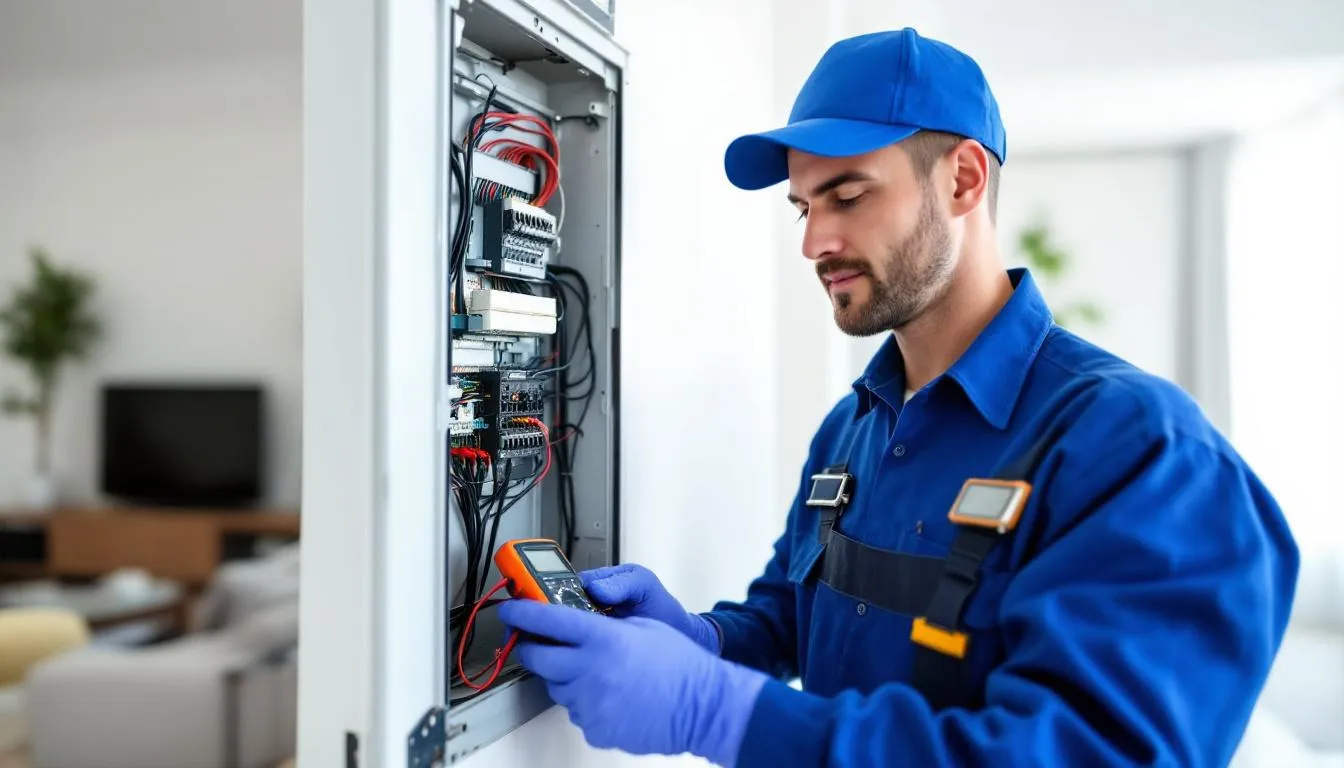
- Conductor sizing follows the 125 percent rule for constant loads. On a 40 amp charger, that usually suggests a 50 amp breaker feeding 6 AWG copper or properly sized aluminum if the run is long. We measure when voltage drop could go beyond 3 percent on long runs. Many hardwired EVSE systems have important GFCI. If you install a receptacle for a plug in charger, your breaker or receptacle likely requirements GFCI defense. Combining GFCI on both the breaker and the EVSE can cause annoyance journeys. Pick one certified approach and stay consistent. Labeling prevents guesswork later on. We identify the EVSE circuit, the breaker handle, and the detach if used. In industrial settings, we include signs for parking enforcement and ADA considerations if applicable. Weather and corrosion control pay off. Usage stainless screws outdoors, anti oxidation substance on aluminum terminations, and seal penetrations thoroughly. In low lying neighborhoods of Huntington Beach, salt air eats steel hardware in a couple of seasons if you neglect it.
Real world circumstances from regional projects
A family in Objective Viejo called after repeated main breaker trips on hot evenings. They had a 100 amp service, a 4 ton a/c, an electric dryer, and a brand-new 48 amp charger set to full power. We documented the problem with a clamp meter throughout peak use, then reconfigured the EVSE to 32 amps and set up a load management controller to pause charging when the AC and range ran together. No more journeys. They credited full by 5 a.m. Without touching the panel.
In Tustin, a property owner renovated the kitchen area and included lighting and undercabinet circuits, then desired a 40 amp battery charger. The existing 125 amp bus panel had actually double tapped breakers and rust. We updated to a 200 amp mix meter main, tidied up the grounding, and added a dedicated 60 amp branch with 6 AWG copper for a 48 amp capable EVSE set at first to 40 amps. The inspector liked the craftsmanship, the labeling, and the brand-new AFCI breakers for cooking area circuits. The property owner prepares a heatpump in a year, and the new panel will handle it.
A little office in Santa Ana with 8 workers desired 2 shared chargers in the parking area. The existing 400 amp service could not take in 100 amps constant simply for EVs without hitting demand charges. We set up two 40 amp pedestals with a clever controller that restricted overall website crediting 48 amps throughout organization hours and enabled 80 amps after 6 p.m. Worker rotated without complaint, and the owner prevented a costly service increase.
Condos, HOA rules, and meter rooms
Many Orange County condos were built with meter spaces and minimal extra capacity. HOA approvals, architectural committees, and shared walls add steps. We assist locals browse meter sharing policies, include submetering if needed for reimbursement, and propose services that avoid drilling common location beams. A typical method is a load management device at the system's panel that allows a 32 amp charger without pressing a 100 amp main. When a panel is recessed in a hallway, we select low profile raceways that match the paint and satisfy clearance rules.
If the HOA requires a licensed electrician Orange County based to bring particular insurance coverage and call them as additional insured, request for those certificates early. It avoids paperwork hold-ups. We also coordinate with home management to protect parking during work and schedule inspections to prevent obstructing residents.
Safety first, especially in older homes
Older homes in some cases have aluminum branch circuits, bootleg premises, or fabric NM cable. An EV battery charger is frequently the very first severe constant load added in decades. We do not just include a breaker and hope. We check the grounding electrode system. We fix double taps. We replace brittle breakers that no longer journey dependably. Small Orange County electrical repair tasks that emerge during an EV job secure the entire home.
If you think overheating, a burning odor near the panel, or recurring problem trips, call an emergency electrician Orange County residents can reach quickly. We offer very same day electrical contractor Orange County service calls when required, however we prefer to attend to dangers before somebody plugs in a high draw charger over night. A quick infrared scan of connections throughout commissioning typically reveals loose lugs that need retorquing.
Cost ranges and the factors that swing them
Budgets vary commonly, however some anchors help frame expectations:
- A standard hardwired 32 or 40 amp EV circuit within 30 feet of a contemporary panel, no drywall repair work, and easy crawlspace or garage access, often lands in the mid hundreds to low thousands with allowing and materials. Long goes to removed garages, trenching, concrete coring, and subpanels press greater. Expect a significant bump when concrete cutting or landscape repair is involved. A panel replacement Orange County homeowners request for capacity and security typically starts in the low thousands and rises with service upgrades, stucco work, and energy coordination. Smart load management adds equipment cost however can conserve thousands by avoiding a service upgrade. Over a couple of years, the trade off is generally favorable if you do not need maximum charging speed nightly.
Quality products and tidy craftsmanship save headaches later on. We choose reputable EVSE brands with field replaceable parts and strong assistance. An inexpensive battery charger that faults intermittently creates calls and aggravation. Dependable gear with regional support makes a property or commercial electrician Orange County groups can rely on more effective on maintenance visits.
Working with energies and inspectors
Most of Orange County is served by Southern California Edison, with municipal utilities in cities like Anaheim. For service upgrades, we coordinate disconnects and reconnects, schedule meter pulls, and submit load letters when required. Plan for power to be off for numerous hours on upgrade day. We stage temporary power for refrigerators and networking when possible, and we advise customers to unplug delicate electronics.
On evaluation day, we https://titusgffn586.nexorafield.com/posts/exact-same-day-electrical-contractor-orange-county-fast-fixes-without-the-wait ensure clear access to the panel, EVSE, and any penetrations. We supply torque logs, EVSE installation handbooks, and the load calc. Local inspectors value transparency, and it speeds their visit. If a correction is noted, we resolve it without delay and interact next steps with the homeowner or center manager.
Planning for the future, not simply today
If you are replacing a panel or opening walls, plan ahead. Channel stubs to future areas cost little bit now and save big later. If you prepare for a second EV or strategy to electrify cooking and water heating, oversize avenue and leave a pull string. For a multi EV family, a pair of 40 amp circuits with power sharing may serve you better than a single 60 amp circuit that maxes one car.
For companies and multifamily residential or commercial properties, style for turnover. Staff and locals change automobiles. What works for today's plug in hybrid might fall short for tomorrow's long variety EV. Channel courses, spare capability, and network connection for clever battery chargers make growth painless.
An easy decision guide when you are not sure
- If your home has a 200 amp service and a modern panel with extra spaces, a 40 or 48 amp EVSE is usually uncomplicated after a load calc verifies headroom. If you have a 100 amp service, consider a 32 amp EVSE or a load management device. If you also desire brand-new electrical appliances or a spa, plan a 200 amp upgrade. If you live in a condominium or townhouse with HOA constraints, prioritize smart load management and surface raceway paths that lessen typical location impacts. If you run a small company with minimal service, style for shared charging and time of usage scheduling to control demand charges. If your panel is old, corroded, or jammed with twins and doubles, a panel upgrade is less about the EV and more about safety.
Choosing the ideal partner
Finding a regional electrical expert Orange County citizens recommend saves time. Search for a business that performs the load estimation in advance, explains options without pressure, and handles permits. Request examples of comparable installations in your city. For intricate sites, a top ranked electrical contractor Orange County property supervisors hire should be comfy with wise load controllers, networked EVSE, and coordination with HOAs and utilities.
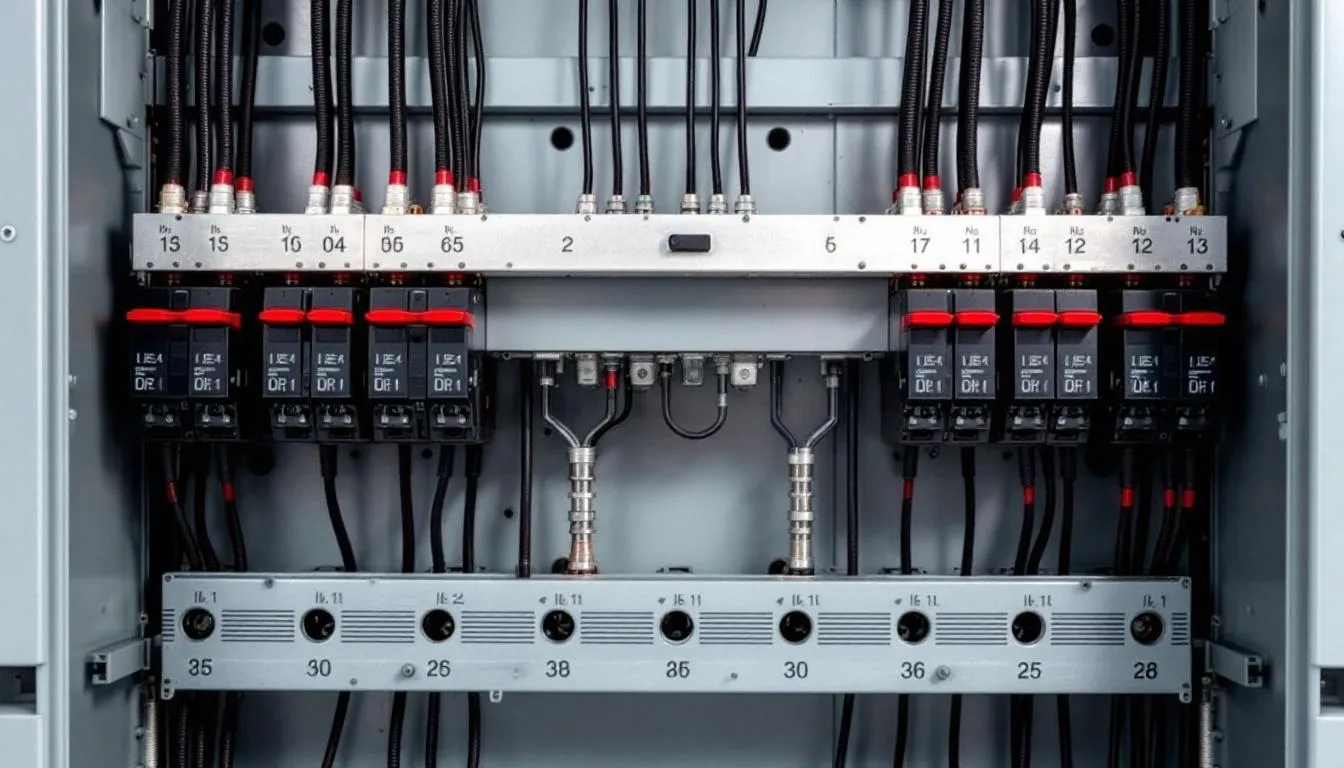
We are often asked whether to purchase the outright most affordable bid. There is a place for a budget friendly electrician Orange County spending plan jobs can utilize, but do not skimp on conductor size, overcurrent protection, or weatherproofing. The very best electrician Orange County property owners suggest will be transparent about products, code compliance, and warranty.
Other upgrades that match well
EV charging tasks typically reveal small improvements that enhance comfort and security:
- Updated lighting setup Orange County homes value, specifically in garages and driveways, improves presence at night. Recessed lighting Orange County remodels love gain from contemporary LED trims that cut heat and minimize loads. Outdoor lighting Orange County backyards require can be tied to motion sensors for security while you plug in after dark. Smart home circuitry Orange County tech enthusiasts want assists schedule charging and incorporate with utility rate plans. Low voltage circuitry Orange County workplaces count on can be routed cleanly together with new conduit when walls are open. Generator installation Orange County homeowners think about for failures should be coordinated with EV crediting prevent overwhelming transfer switches.
We also deal with outlet installation Orange County customers request near workbenches, ceiling fan setup Orange County living-room need for air movement, and thorough electrical evaluation Orange County buyers desire before closing. Electrical troubleshooting Orange County service calls stay a staple, from secret journeys to flickering lights. For urgent problems, a 24 hour electrical contractor Orange County customers can reach guarantees security around the clock.
What to do before you call
A little preparation assists us assist you.
- Take clear photos of your primary electrical panel, inside and out, plus any subpanels. Catch the main breaker ranking and all labels. Measure the approximate distance from the panel to the preferred battery charger area, keeping in mind obstacles like completed ceilings, driveways, or landscaping. List major home appliances and whether they are gas or electric. Include a/c tonnage if known. Check HOA guidelines if appropriate, and recognize the meter location for your system or suite. Think about future requirements, such as a 2nd EV or brand-new electric appliances, so we can size with foresight.
The bottom line
EV charging need to be unnoticeable. You park, plug in, and get up all set to drive. Arriving indicates appreciating the limits of your electrical system, doing the math of load calculations, and selecting between an ideal sized circuit, load management, or a panel upgrade. In Orange County, where homes vary from mid century bungalows to brand-new builds with energy code prewiring, there is no one path for every address. A careful look at your panel, your practices, and your goals leads to the best answer the first time.
If you are looking for an electrician near me Orange County and want a team that treats your home like their own, begin with a discussion and a load estimation. Whatever excellent follows from that.